Home›Blog›Post-Storm Seawall Inspection: 6 Things to Check Around Your South Florida Property
Post-Storm Seawall Inspection: 6 Things to Check Around Your South Florida Property
October 2026 · Storm Damage · 7 min read
Blog
Article Summary
After a storm, most South Florida homeowners check the roof, windows, landscaping, and generator — waterfront owners should also check the shoreline. This guide covers six areas to photograph after storm activity, from the seawall itself to drainage, dock structures, and the documentation that makes conditions comparable over time.
After a South Florida storm, the inspection routine is usually predictable: walk the roof line, check the windows, clear the landscaping, test the generator. Those checks matter. For a waterfront property, they are incomplete.
Storm activity moves water, soil, and pressure along the shoreline. A seawall can look largely unchanged from the patio while the soil behind it has shifted, drainage has found a new path, or a connection at the dock has loosened. The most useful thing a homeowner can do in the days after a storm is capture what changed — clearly, from consistent angles, with dates attached.
Why should a post-storm property check include the shoreline?
Storms change the conditions a seawall is built to resist. Wave energy, rainfall volume, tide levels, and runoff can all move soil and redirect water in ways that are not visible until months later, when a walkway settles or a paver separates.
Photographs taken while the change is fresh give a professional something to work with. They show what the shoreline looked like immediately after the event, which makes it far easier to tell a new condition from something that has been developing slowly. That distinction often drives the recommendation during a professional seawall inspection.
What are the six things to photograph after a storm?
Work through the shoreline in this order and photograph each area:
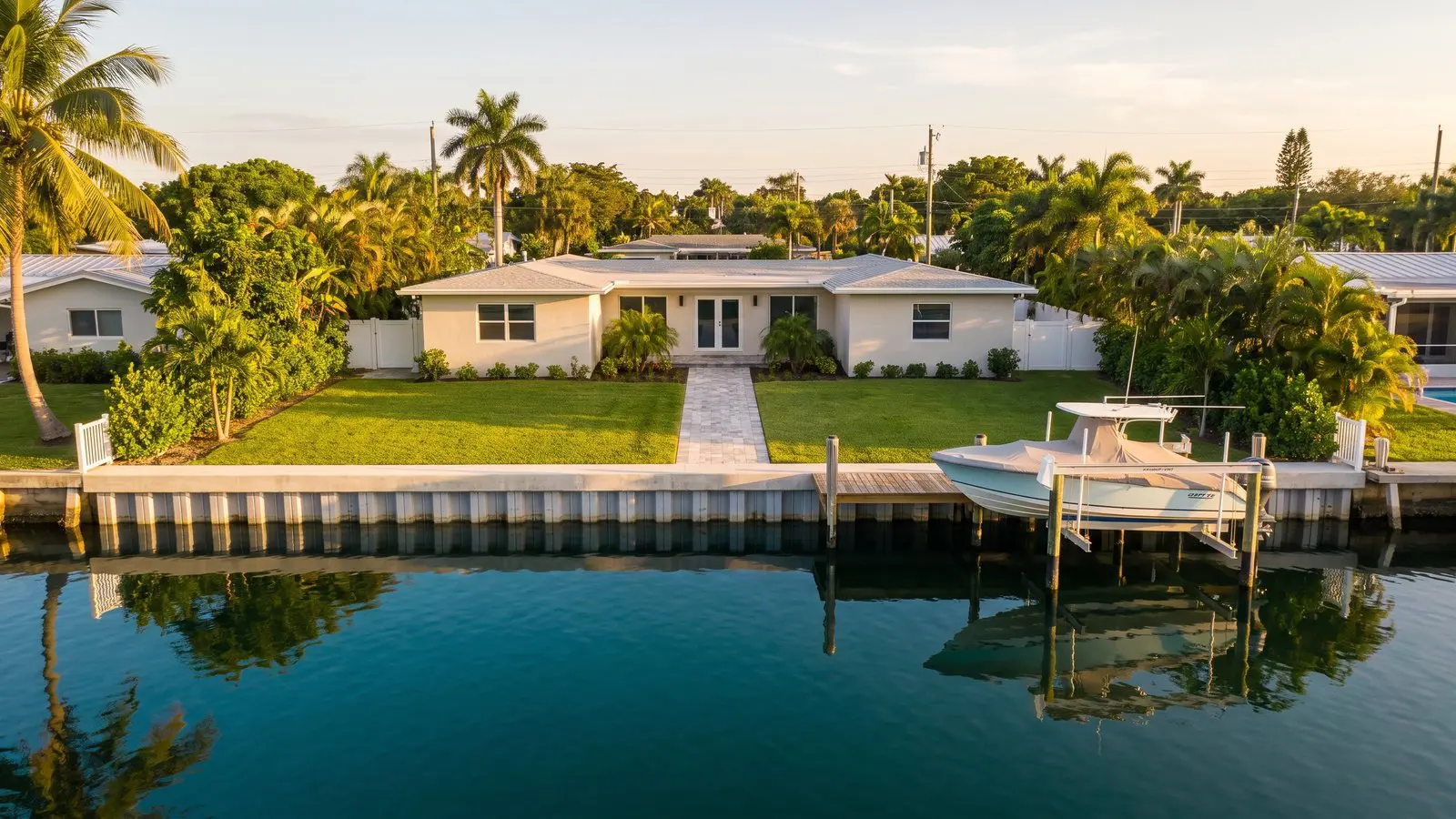
The seawall itself — shot from the same angles you use for routine property photos.
The soil and hardscape behind the wall — new gaps, sinkage, separated pavers, settled walkways.
Drainage — standing water, new flow paths, clogged outlets, water collecting near the wall.
Docks, boat lifts, piles, and connections — anything that ties into the structure or the seabed.
Sediment, debris, and unusual waterline changes — details that explain what the water did.
Documentation — the date, the location, and whether the change is new.
What should you look for on the seawall, the soil, and the drainage?
Start with the wall. Photograph it from the same locations you already use for property photos, then look for cracks, movement, leaning, damaged caps, or any area that simply looks different than it did before the storm. Consistent angles are what make a comparison possible later.
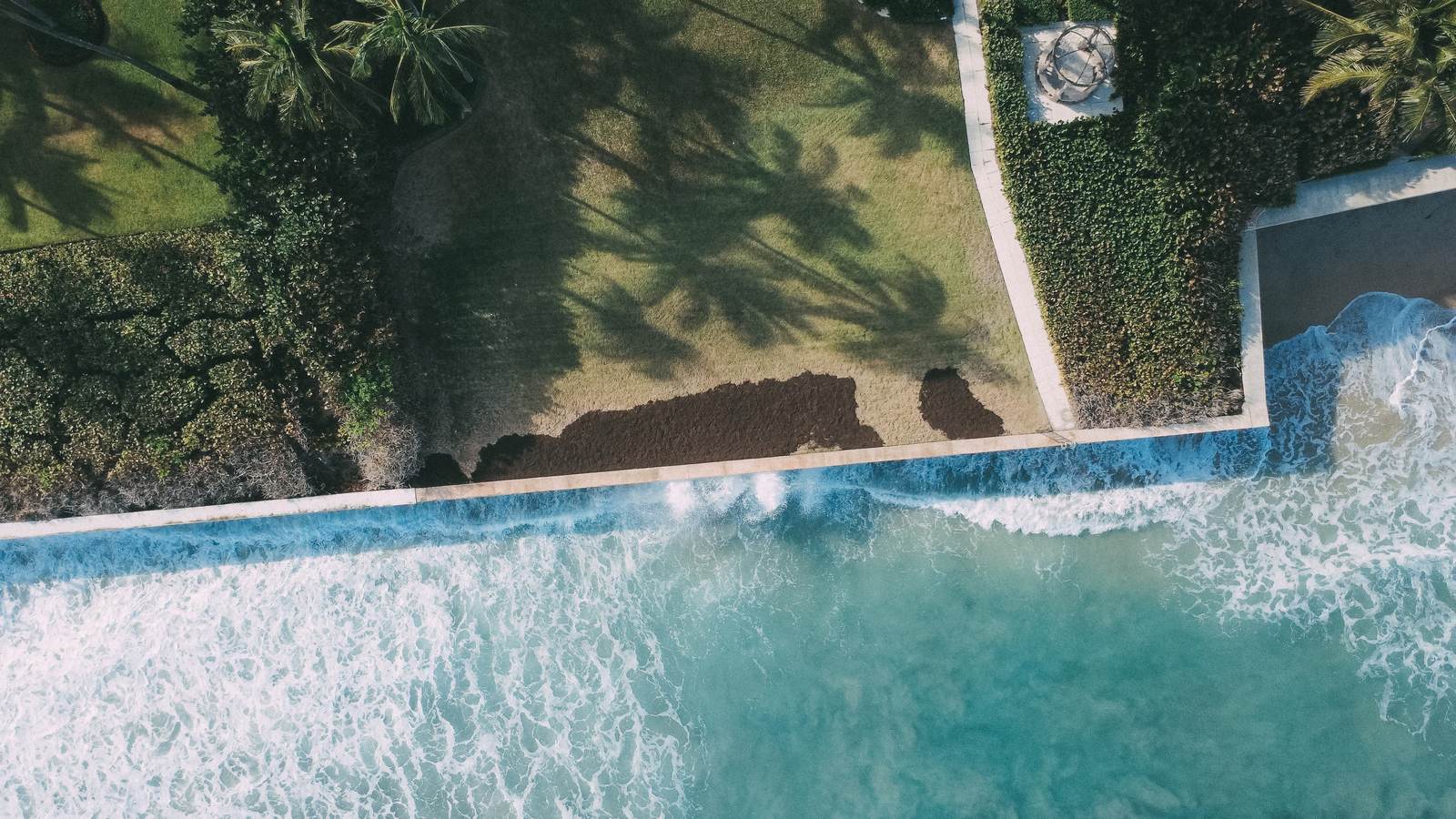
Next, turn around and photograph the ground behind the wall. New gaps, sinkage, separated pavers, settled walkways, and newly exposed areas can point to erosion or voids — empty pockets where soil used to provide support. This is the pattern described in our overview of subsurface erosion behind seawalls.
Then check drainage. Note standing water, new flow paths, clogged outlets, and any place where water is now collecting near the seawall. Drainage changes add pressure to soil that may already be compromised, which is why they belong in the same photo record as the wall and the hardscape. Where support has been lost, soil stabilization is often part of the solution.
What changes matter at the dock, the piles, and the waterline?
Storm activity affects more than the wall. Photograph docks, boat lifts, piles, and connection points, paying attention to hardware that has shifted, decking that no longer sits flat, or piles that look out of alignment. Conditions like these fall under dock repair and construction and, where a lift is involved, boat lift installation and service.
Then photograph the water’s edge. Sediment, debris, and unusual waterline changes are informative even when they look cosmetic — they help a professional reconstruct how water moved during the storm and where it concentrated.
How should you document post-storm changes so they stay useful?
The sixth item is the one most often skipped. For every photo, record the date, the location on the property, and whether the change appears to be new.
A simple, dated photo record does three things:
It turns scattered images into a record you can compare season to season.
It shows whether a condition is stable or progressing.
It gives an inspector context before anyone sets foot on the property.
“A post-storm inspection is not about panic. It is about capturing useful information while the changes are still visible, so conditions can be compared over time and the right next step is based on evidence.”
When should you stop and call a professional instead?
Do not put yourself at risk to inspect underwater areas. Photograph what is safely visible from land and stop there.
Call a professional when:
The condition is below the waterline.
You see movement in the wall, cap, or connected structures.
You see significant settlement behind the wall or around hardscape.
Below-waterline conditions require a dive inspection — an in-water assessment by a trained professional — because a defect that looks minor from above can extend well below the surface. Reviewing the full range of seawall services can help you understand what a professional evaluation may cover.
A post-storm inspection is not about panic. It is about getting useful information while the changes are still visible. The Foam Guys provides seawall inspections, dive inspections, stabilization, and marine solutions across South Florida, including Miramar, Fort Lauderdale, Pompano Beach, and nearby communities. Licensed and insured. Hablamos Español.
If your shoreline looks different after the storm, schedule a free inspection and have the conditions documented while they are still easy to see.
Frequently Asked Questions
How soon after a storm should I photograph my seawall?
As soon as it is safe to walk the property. Sediment lines, debris placement, and fresh soil movement fade quickly, and those details help explain what happened during the storm.
Why do the photos need to be taken from the same angles every time?
Consistent angles make changes measurable by eye. When a photo matches an earlier one, cracks, leaning, and settlement are far easier to identify than in images shot from different positions.
Can I inspect below the waterline myself if the water looks calm?
No. Do not enter the water to inspect underwater areas. Below-waterline conditions require a professional dive inspection, because damage that looks minor from above can continue well below the surface.
What does drainage have to do with my seawall?
Water that collects near the wall or follows a new path adds pressure to soil that may already be compromised. Documenting drainage changes alongside the wall gives a clearer picture of the cause.
What if I find settlement or movement in my photos?
Contact a professional rather than waiting for the next storm. Movement and significant settlement suggest a condition behind or beneath the structure that should be evaluated in person.
F
The Foam GuysSeawalls, marine construction & foam stabilization across South Florida. (954) 370-6161
Need Help With Your Property?
Free estimates for seawall repair, marine construction, foundation lifting, and foam stabilization.
We’re Only A Foam Call Away! Seawalls, marine construction, waterproofing, foundation lifting, and concrete leveling across South Florida — Miramar, Fort Lauderdale, Pompano Beach, and nearby communities. Licensed & insured. Hablamos Español.