Home›Blog›Sinking Concrete, Uneven Floors, or Water Intrusion? Start with the Cause
Sinking Concrete, Uneven Floors, or Water Intrusion? Start with the Cause
October 2026 · Seawall Services · 7 min read
Blog
Article Summary
Sinking concrete, uneven floors, and water intrusion are symptoms of something happening below the surface — lost soil support, voids under the slab, or a drainage path moving water the wrong way. This post covers the warning signs to document and the questions to ask before any repair is scheduled.
A sinking walkway, an uneven pool deck, or a damp foundation is easy to dismiss. It stays easy to dismiss until the movement spreads or the surface becomes a safety issue.
By that point the repair scope is usually larger than it needed to be. The practical move is to treat the surface change as information and find out what is happening underneath it.
Why does concrete sink and settle in South Florida?
Concrete does not fail on its own. It settles when the material supporting it changes.
Three conditions account for most of what we see on South Florida properties:
Soil loses support. Fine soils wash out or compress, and the slab loses the bearing surface it was poured on.
Voids develop below the slab. An open space forms beneath the concrete, so the slab spans instead of resting.
Drainage moves water through the wrong areas. Runoff, roof discharge, or grading pushes water where it can carry soil away or sit against a structure.
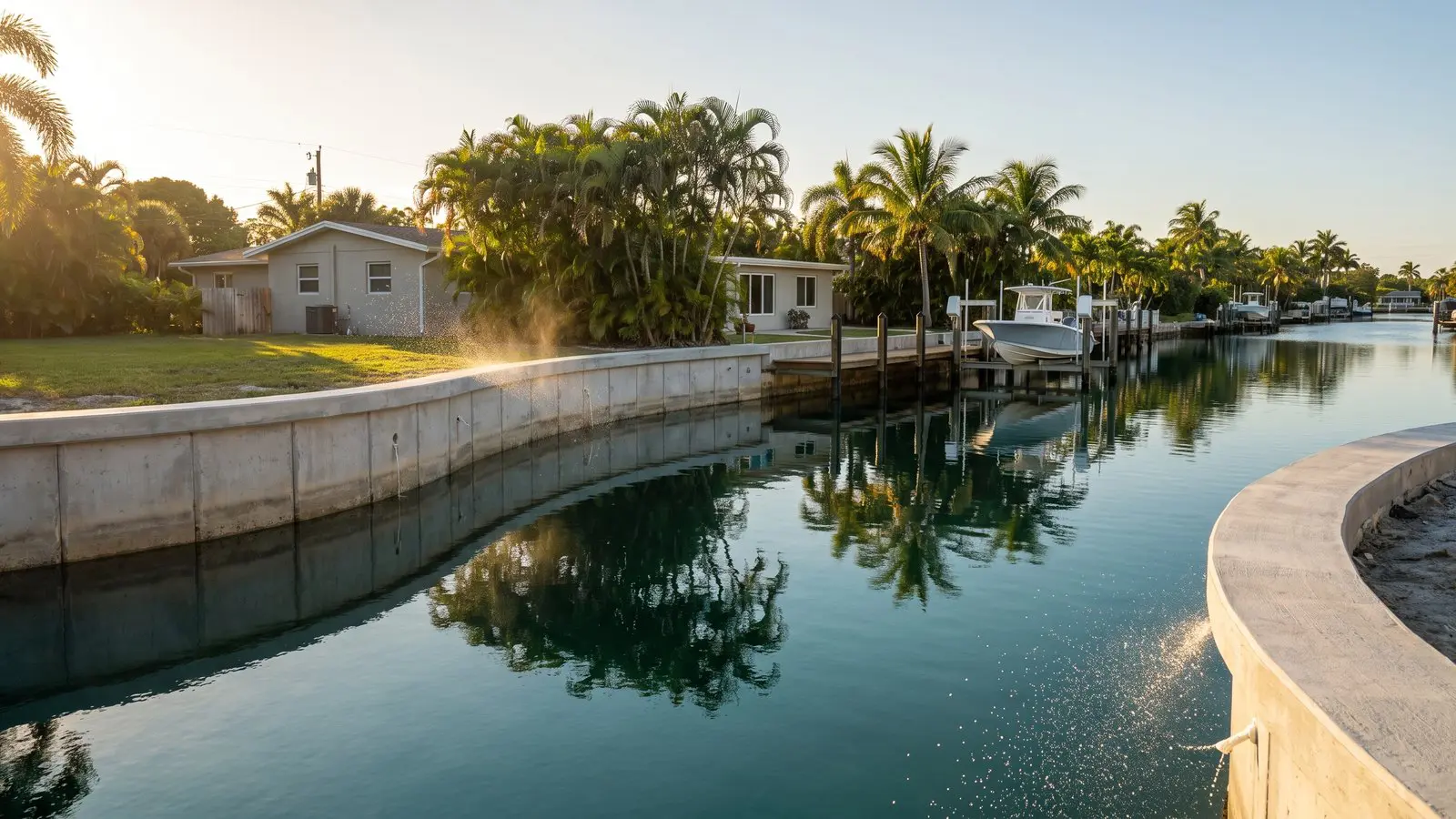
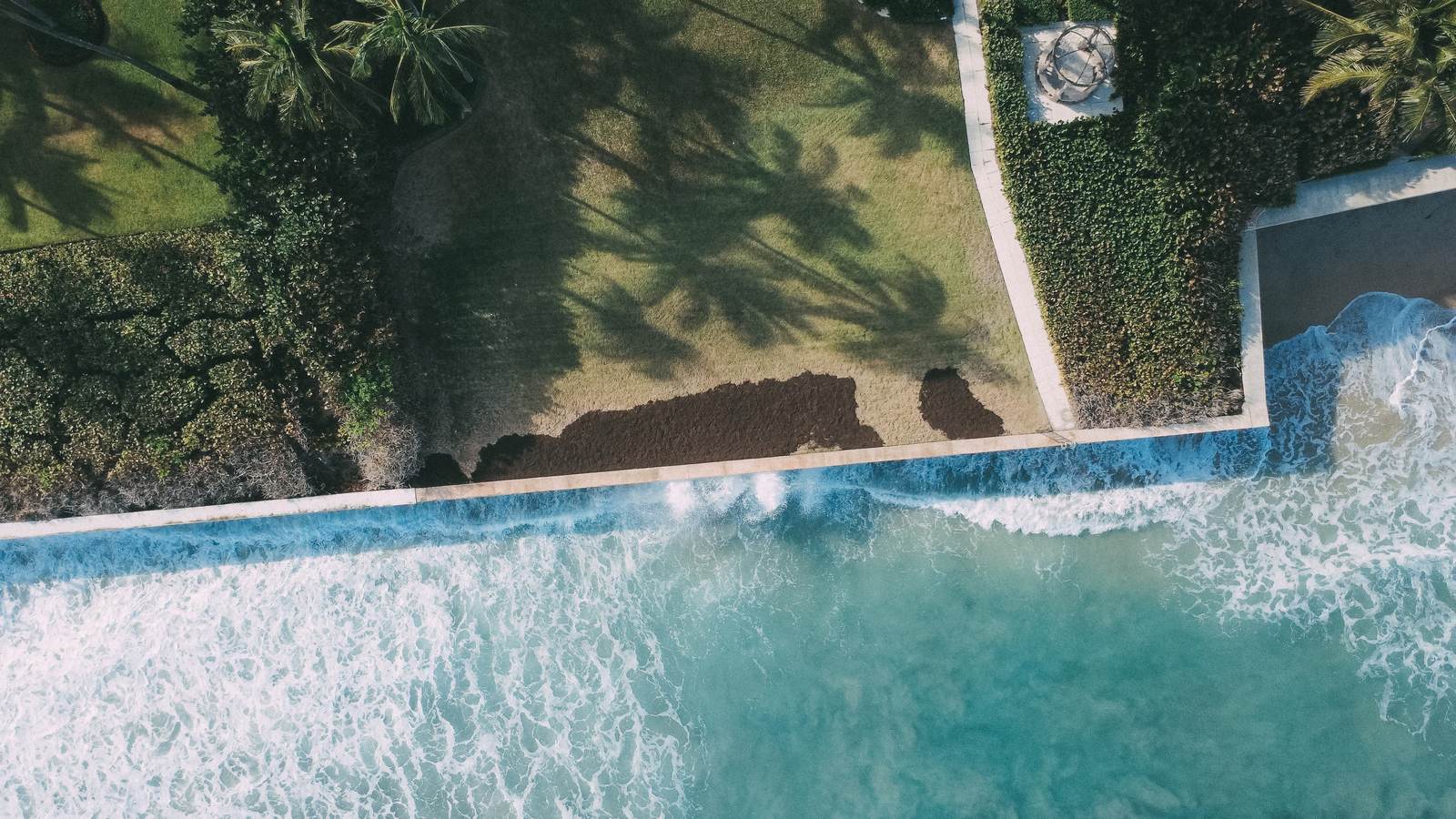
Near the water there is another layer. Erosion and changing soil conditions behind a bulkhead or along a shoreline can affect the ground under a pool deck, patio, or driveway well inland of the waterline. That is where soil stabilization enters the conversation, because the fix has to address the material carrying the load.
What warning signs should you document first?
Most of the useful evidence is visible from a safe standing position. Walk the property and look for:
Trip edges where one slab or paver sits higher than the next
Separated joints that have opened between sections
Cracks that keep changing in width, length, or direction
Sinking pavers around pool decks, walkways, and entries
Water collecting against the structure instead of draining away
Interior moisture that appears after rain — baseboards, floor edges, garage slabs
Two steps make the evaluation far more productive. Photograph the area, including a wide shot and a close shot of each location. Then note when you first noticed the change, even approximately.
That timeline matters. A joint that opened over three years and a joint that opened after one storm season point toward different conditions below.
Why is the visible symptom not always the cause?
The symptom shows up where the surface is weakest, not necessarily where the problem started. A low corner of a driveway can reflect a drainage path that begins twenty feet away. Interior moisture can follow a route through soil and a foundation wall rather than through the spot where the stain appears.
This is why the first step should be an evaluation, not a guess. An evaluation looks at the slab, the surrounding grade, the drainage, and the soil conditions together, so the scope is written against the actual condition.
Where the picture below the surface is unclear, GPR scanning can help identify what is under the concrete before work is planned.
“The surface tells you where to look, not what is wrong. We evaluate the soil, the voids, and the water path first, because that is what determines whether a repair holds.”
Which solutions may be used once the cause is identified?
The right answer depends on the condition, and it is often a combination rather than a single service. Depending on what the evaluation finds, scope may include:
Concrete leveling to bring settled slabs, walkways, and pool decks back into plane
Void filling to restore continuous support under a slab that is currently spanning
Soil stabilization to strengthen the material carrying the load
Waterproofing where moisture is entering a foundation or below-grade area
Drainage improvements to redirect the water that is driving the condition
The scope should match what is happening below the surface. If the evaluation does not explain the cause, the solution is being chosen before the problem is understood.
Why can a quick patch fall short, and what should you ask?
A patch or a top-up can make a surface look better for a while. What it may not do is restore lost support or change the water path that removed the soil in the first place. When the underlying condition is untouched, the same area tends to move again.
Before any work is approved, ask three questions:
What caused the settlement?
How will the area be stabilized?
What maintenance will the property need afterward?
Clear answers to those three tell you whether you are buying a repair or buying time. A contractor should be able to answer all three in writing before the scope is approved.
Who should document the condition early?
Homeowners, property managers, HOAs, and commercial operators all gain from the same discipline. Documenting a condition while it is small produces more options and a clearer budget, and it gives boards and owners something concrete to review before a vote or a capital plan.
Waiting narrows the options. A trip edge is a maintenance item; a spreading settlement with active water intrusion is a project.
What to have ready
Dated photos of each affected area, wide and close
When the change was first noticed
Any drainage, irrigation, or storm history you are aware of
Prior repairs made to the same area
If your concrete is sinking, your foundation is showing moisture, or a waterfront surface has changed, request a free estimate and start with the cause. The Foam Guys provides concrete leveling, foundation lifting, waterproofing, soil stabilization, and marine construction across South Florida service areas including Miramar, Fort Lauderdale, and Pompano Beach. Licensed and insured. Hablamos español.
Frequently Asked Questions
Why is my concrete sinking if the slab looks intact?
A slab can stay in one piece while the soil under it settles or a void forms beneath it. The concrete is following the loss of support, which is why an evaluation looks below the surface rather than only at the surface.
Can water intrusion be related to sinking concrete outside?
Yes. Drainage that moves water toward a structure can both carry soil away from under a slab and push moisture into a foundation, so the two symptoms often share one cause.
Do I need to inspect anything myself before an evaluation?
Only what you can see safely from land. Photograph the affected areas and note when you first saw the change; never enter the water or attempt to inspect below the waterline yourself.
Will concrete leveling fix the problem permanently?
Concrete leveling corrects the surface and, with void filling and stabilization, restores support. Long-term performance also depends on addressing the drainage or soil condition that caused the movement.
Does The Foam Guys evaluate residential and commercial properties?
Yes. We work with homeowners, property managers, HOAs, and commercial operators across Miramar, Fort Lauderdale, Pompano Beach, and nearby South Florida communities.
F
The Foam GuysSeawalls, marine construction & foam stabilization across South Florida. (954) 370-6161
Need Help With Your Property?
Free estimates for seawall repair, marine construction, foundation lifting, and foam stabilization.
We’re Only A Foam Call Away! Seawalls, marine construction, waterproofing, foundation lifting, and concrete leveling across South Florida — Miramar, Fort Lauderdale, Pompano Beach, and nearby communities. Licensed & insured. Hablamos Español.