Home›Blog›What to Look for During an October Seawall Inspection in South Florida
What to Look for During an October Seawall Inspection in South Florida
September 2026 · Seawall Services · 7 min read
Blog
Article Summary
Storm season may have changed conditions along your waterline, even when nothing looks obviously wrong. This October checklist walks South Florida waterfront homeowners through the soil, the wall, the drainage, and the waterfront edge — and explains where a professional needs to take over.
Storm season is winding down, but the shoreline is the part of a waterfront property that quietly absorbs the season’s rain, tides, and wave energy. A seawall can still look straight and sound from the yard while the soil behind it has moved.
That is why October is worth a walk along the water with a clear checklist. The point is not to diagnose anything — it is to notice what changed, document it, and get an informed answer before a small condition becomes a structural one.
Why is October a smart time to check your seawall?
October is a smart time to check your seawall not because something is automatically wrong, but because storm season may have changed what is happening along the waterline.
Heavy rain, high tides, and storm activity move water and soil — the two things a seawall depends on. Changes that started in August can become visible in October, which makes this the point in the year when a walkthrough is most useful.
Work through the property in the same order every time:
The surrounding soil behind and beside the wall
The wall itself, including the cap and joints
Nearby drainage and how water moves across the property
The waterfront edge — docks, boat lifts, piles, and tie-in points
That sequence matters, because conditions at the surface are often the last symptom of something that began below it. A structured seawall inspection follows the same logic.
What should you look for in the soil around the seawall?
Start with the soil. It is the part of the system homeowners can see the most of, and it changes first.
Look for:
New gaps or separations near the wall
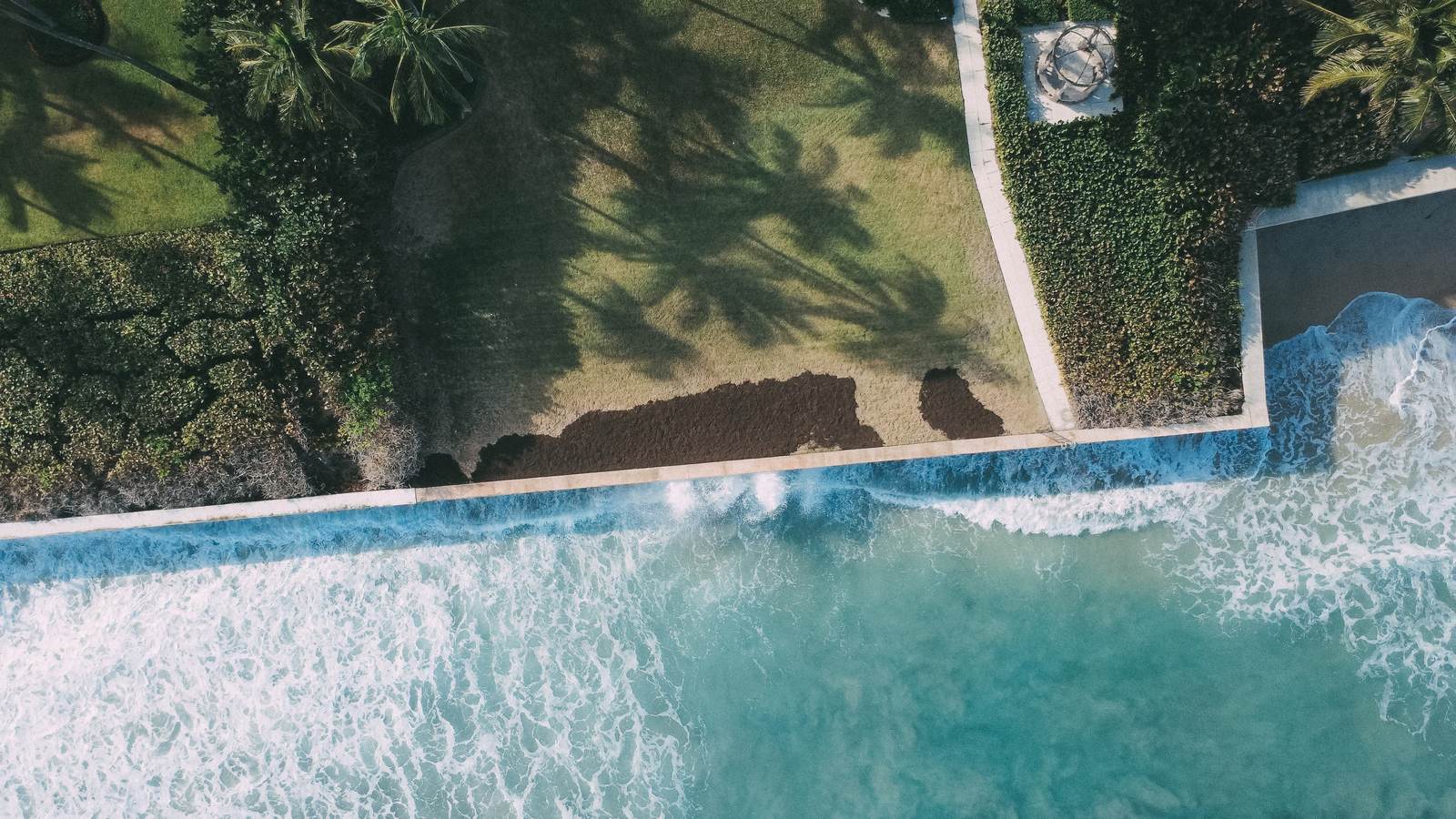
Erosion or washed-out areas along the shoreline
Sinking pavers or separated hardscape
Settled walkways or patio edges that dropped
Ground that feels uneven or soft underfoot near the seawall
Soil loss behind the wall can create voids — empty pockets where compacted soil used to provide support. Voids are not obvious from the surface, which is why a sinking paver is worth taking seriously even when the wall above it looks fine.
This is the condition described in more detail in our post on subsurface erosion behind seawalls. Where lost support is confirmed, soil stabilization is often the part of the work that addresses the actual cause.
What changes in the wall and nearby drainage deserve attention?
Next, look at the wall itself. You are comparing it against how it looked before storm season, not judging it against new construction.
On the wall and cap
Cracks, especially new ones or ones that have widened
Movement or leaning away from the property
Damaged caps or spalling along the top edge
Changes in the joints between panels or sections
Then check nearby drainage. Water that is not moving the way it used to can put additional pressure on the soil and on the structure.
In the drainage path
Standing water that did not collect there before
New flow paths cutting across soil or hardscape
Clogged or obstructed outlets near the wall
Drainage and structure are one system. A wall showing movement and a yard holding water are usually telling you the same story, and both belong in the notes you hand to whoever performs the seawall repair evaluation.
What should you check along the waterfront edge?
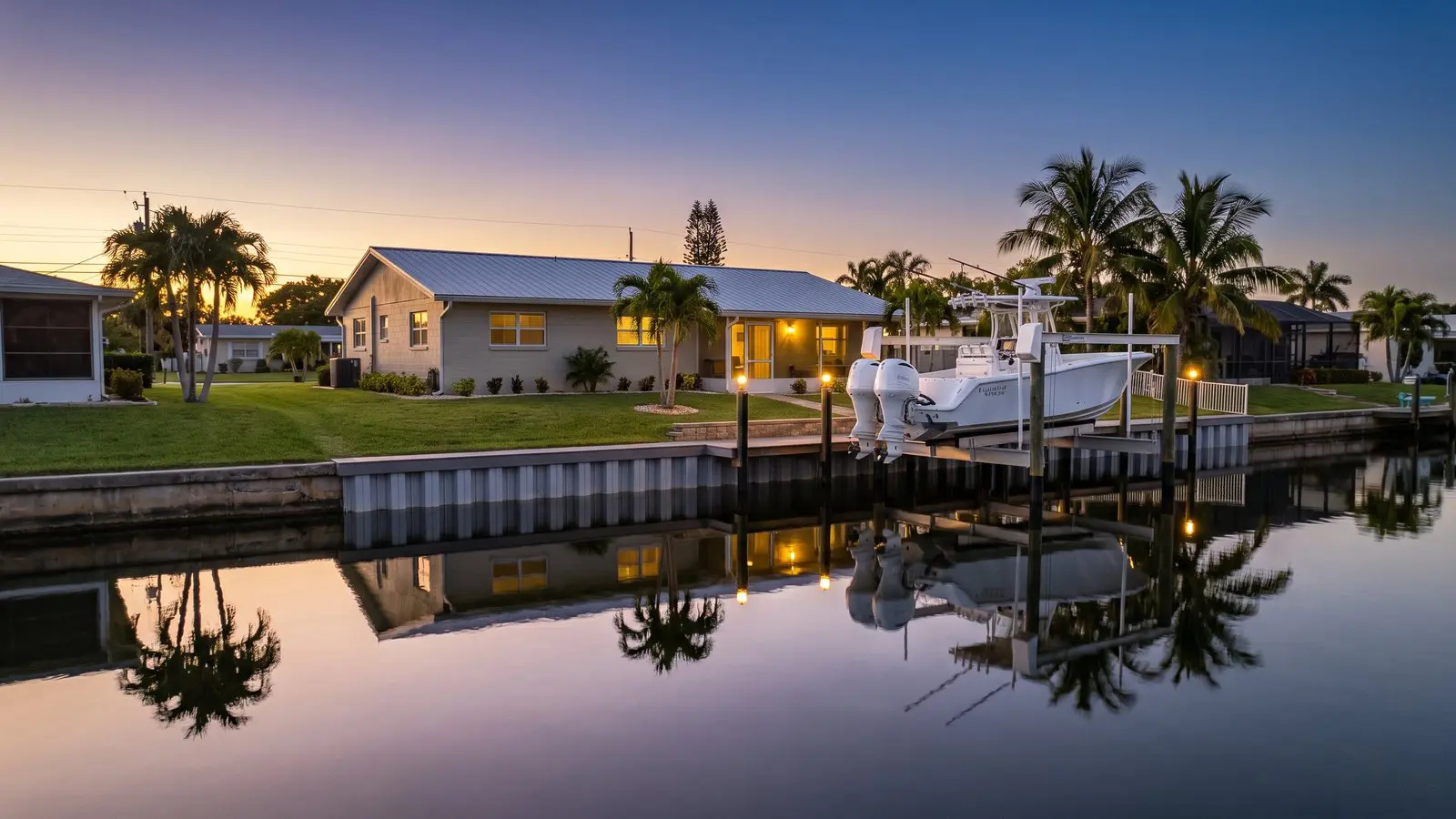
Do not forget the waterfront edge. Docks, boat lifts, piles, and tie-in points can all show changes after heavy rain, high tides, or storm activity — sometimes before the wall does.
Check where structures connect to land and to the wall: loose hardware, shifted decking, piles that look out of plumb, or a lift that no longer lines up the way it did. Conditions like these belong in the same review as dock repair and construction work.
Photograph the same locations over time
Take photos from the same locations each time you inspect, and note the date. A repeatable photo set turns a vague impression into a comparison a professional can act on.
Why should you never inspect below the waterline yourself?
One safety rule outranks everything else on this list: do not enter the water, and do not try to inspect below the waterline on your own.
An underwater condition can look minor from above and still require a professional dive inspection. Visibility, current, structure, and hardware make the waterline an unsafe place to investigate without training and equipment.
If something looks different at or below the water surface, stop, photograph what you can see from land, and have it evaluated by a licensed and insured team.
“An inspection is about understanding the wall, the soil behind it, and the conditions creating the problem. Once we know that, the recommendation can match what the property actually needs.”
Does a seawall inspection mean you need a rebuild?
No. The goal of an inspection is not to sell you a rebuild. It is to understand the condition of the wall, the soil behind it, and the factors creating the problem.
From there, the recommendation follows the findings:
Sometimes the right next step is maintenance
Sometimes it is stabilization or repair
Sometimes planning early simply gives you more options
That last point is the reason to check in October rather than after the next event. Documented conditions and a clear scope leave room to choose, budget, and schedule — while an emergency does not.
The Foam Guys provides seawall services, marine construction, soil stabilization, and waterfront maintenance across South Florida, including Miramar, Fort Lauderdale, Pompano Beach, and nearby communities. We are licensed and insured, and hablamos Español.
How often should a South Florida seawall be inspected?
Plan on a homeowner walkthrough at least twice a year, and once more at the end of storm season in October. Any time you see new cracks, settlement, or drainage changes, have it evaluated rather than waiting for the next scheduled check.
Can I inspect my seawall myself?
You can inspect everything visible from land: soil, hardscape, the wall face, the cap, joints, drainage, and dock or lift connections. Never enter the water or inspect below the waterline yourself, because that portion requires a professional dive inspection.
What do sinking pavers near a seawall usually mean?
They often point to soil loss or voids behind the wall, where the material that provided support has washed out. The paver is the visible symptom; the condition below the surface is what needs to be identified and addressed.
Does a cracked seawall have to be replaced?
Not necessarily. Depending on what the inspection finds, the answer may be maintenance, targeted repair, or stabilization of the soil behind the wall. A full rebuild is one option among several, not the default.
What should I document before requesting an inspection?
Photograph each area from consistent locations, note the date, and record whether the change is new. That record lets a professional compare conditions over time and focus the evaluation where something actually shifted.
F
The Foam GuysSeawalls, marine construction & foam stabilization across South Florida. (954) 370-6161
Need Help With Your Property?
Free estimates for seawall repair, marine construction, foundation lifting, and foam stabilization.
We’re Only A Foam Call Away! Seawalls, marine construction, waterproofing, foundation lifting, and concrete leveling across South Florida — Miramar, Fort Lauderdale, Pompano Beach, and nearby communities. Licensed & insured. Hablamos Español.